Thursday, 26 September 2013

MIND THE GAP


Young children can become upset and self-conscious about a gap between their upper front teeth. However, there usually is no reason for concern because during tooth eruption, it is normal for a diastema, or gap, to appear.
Nearly every 5-year old has a diastema. Half of all 8-year olds will have a diastema. At this age the permanent “eye-teeth” start pushing against the roots of the permanent central incisors and move them apart. The eye teeth complete their eruption when your child is about 12-years old, letting the teeth naturally snuggle up next to each other.
However, sometimes teeth do not develop normally. An abnormal diastema can cause speech problems and poor chewing function as well as affect your child’s self-esteem and social behavior.


There can be several reasons why the diastema appears, including:

1.    •an oversized frenum, the flap of tissue that connects the upper lip to the gums.
2.    •a habit such as pushing the tongue against the front teeth.
3.    •a hormone imbalance that makes the jaw grow larger, but the teeth are normal size.
If the diastema does not close on its own, we can consider several treatment options such as doing nothing, fitting braces, adding veneers (thin porcelain shells that cover the fronts of the teeth), bonding (placing tooth-colored material between the teeth) or creating crowns or a bridge.

It’s important that we regularly examine your child’s developing teeth to prevent dental problems later in life because everyone’s teeth are meant to last a lifetime.

Wednesday, 18 September 2013

HOT AND DRY

Have you ever had ‘cotton mouth’? Everyone occasionally has a dry, sticky feeling in their mouth because of heat or a reaction to food but when your mouth is chronically dry, it’s a serious problem. When you notice a dry mouth, it’s a condition called xerostomia (zero-stow-me-uh) and may be only noticeable after you've lost about 60% of your saliva.
Xerostomia refers to a sensation of a dry mouth and can be caused by many different factors including over 400 different medications. A constantly dry mouth isn't just annoying but makes it difficult to speak, chew and swallow foods and prevents you from maintaining proper nutrition.
Without that protective saliva, your mouth becomes a bacteria playground. If left untreated, xerostomia can result in tooth decay and gum disease, painful oral ulcers or a rampant yeast infection.
There are a few things that you can do to treat the symptoms of xerostomia. There are over-the-counter and prescription products and saliva substitutes that may help alleviate symptoms. They are available in sprays, toothpaste, lozenges, gels, chewing gum and liquids.

Another way is to avoid the things that cause dry mouth. Dental products that contain drying ingredients like alcohol or sodium laurel sulfate can exacerbate the existing problem. Other steps include stopping smoking and the drinking alcoholic beverages, consulting your physician about changing medications as well as reducing stress and anxiety.
If you are experiencing chronic dry-mouth, it is also important to have more frequent dental check-ups so that we can closely monitor the condition. If you are concerned about xerostomia, call and make an appointment, and bring a current list of medications with you to your check-up.

Thursday, 12 September 2013

BETWEEN CHEEK & GUM

Just a pinch between your cheek and gum can cause a condition called leukoplakia. Leukoplakia is a white or gray patch of thick and slightly raised soft tissue that usually appears on the tongue, gums or the inside of the cheek.
Tobacco users who hold a wad of tobacco in the mouth for long periods of time or smoke a pipe are at high risk of developing leukoplakia. It can take weeks or months for the patch to develop. Although it is painless, it might become sensitive when touched or to hot and spicy foods.
Fortunately, the condition usually resolves itself when the irritation is removed; however, sometimes, we must perform surgery to remove the patch. Leukoplakia can progress into oral cancer or remain as a pre-cancerous lesion if left unchecked.

Non-tobacco users aren’t off the hook for leukoplakia though. Along with smoked or smokeless tobacco, leukoplakia can result from other irritation caused by a broken tooth; a poorly fitting denture; rough spots on a filling, crown or tooth and chewing the inside of your cheek.
Identifying conditions such as leukoplakia when they are in their early stage is very important, which is one reason why we recommend bi-yearly dental check-ups. However, you should see us immediately if you have something out of the ordinary in your mouth. The earlier we make a diagnosis, the quicker we can restore your health.

Thursday, 5 September 2013

A HARD ITCH TO SCRATCH


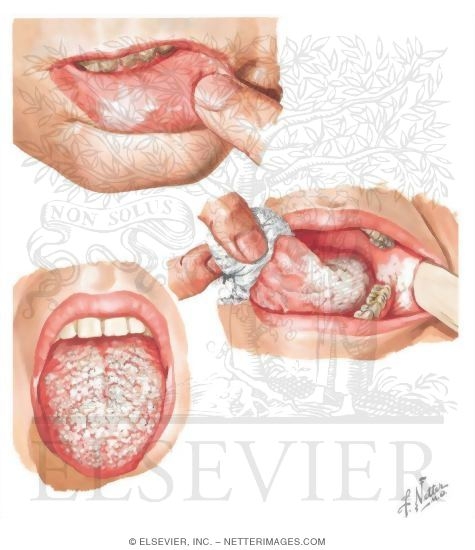
tongue It itches; it flakes, and it‘s unwelcome. Psoriasis is an auto-immune inflammatory condition that runs in families. It could be running across your mouth as well. Recently made notable by Kim Kardashian, psoriasis only affects about three percent of the world population. If you’re in that three percent and develop it, especially in your mouth, it can be annoying at best and scary at worst. An equal opportunity disorder, it affects men and women equally and often doesn’t show up until a person is in their 20s or 30s.

While we primarily think of psoriasis as a dry skin condition, it can appear anywhere in the moist oral cavity. Commonly seen on the top of the tongue, it resembles the inflammatory condition known as geographic tongue, which consists of bare patches outlined by a thin white or yellow line, like outlining the continents on the globe.

On the cheek, lip, gums, palate or floor of the mouth, oral psoriasis can be irregularly-shaped, flat or raised, red or white patches or even ulcers. It’s no surprise that if you have psoriasis in your mouth you probably have it on other parts of your body. The exact cause is unknown. There are several likely factors, such as stress, trauma or infection. The episodes come and go, and some episodes are more severe than others.exam

It is fairly easy to diagnose, especially when we have your complete family medical history. We might need to take a biopsy to rule out other conditions. The good news is that oral psoriasis is not cancer, nor does it permanently damage your oral tissues. It usually goes away on its own without treatment. Most importantly, anytime you notice something unusual in your mouth, please see us immediately so we can check it out.

Thursday, 29 August 2013

DECAYING SELF-ESTEEM

Hidden tooth decay is the number one preventable, chronic childhood disease. But unlike most childhood diseases, a cavity-riddled smile can cause embarrassment, chronic discomfort and damaged self-esteem.

Teens or young adults that have decayed teeth, oral infection and foul breath might be ridiculed and shunned by peers at the time in their lives when social acceptance can seem like the most important thing in the world. If nothing else, a teen with an unhealthy mouth is less apt to smile.

 A lack of self-esteem can lead teens to worsen dental issues by eating an unhealthy diet and having poor oral hygiene. Many teen's diets consist mainly of sugary, carbohydrate-rich foods and beverages. Besides unhealthy snacking, some teens drink multiple cans of sodas, sports/energy drinks and/or sugary coffee drinks all day every day. Oral bacteria convert these sugars into acids that leech the calcium and phosphorous out of the teeth and lead to tooth decay.Happy

 When the teen’s teeth and mouth show signs of lack of care, such as bad breath and cavities, the teen’s self-esteem sinks even lower. It’s a vicious cycle.

We encourage parents to not only seek help for their struggling teenager, but to step up their teen’s dental visits. We may need to see your teen more than the typical two hygiene exams each year so that we can closely monitor any changes in the teen’s mouth and take immediate preventative measures. Working together we can give your teenager a healthy, beautiful smile to show off a dynamic, confident new attitude.

Thursday, 22 August 2013

THE MODERN MAN


The myth of the rugged he-man ‘washing’ his face with a handful of gravel is fading into obscurity. Nowadays, men enjoy a lot of the same self-care products that women do. Modern men use hair styling products, gentle soaps, moisturisers and balms to keep their skin, hair and nails healthy and attractive. There’s nothing especially masculine about neglecting your health or appearance…especially when it comes to your oral health.
Taking good care of your oral hygiene isn’t just about appearance but it is integral to maintaining your overall good health. Without strong healthy teeth and gums, getting proper nutrition can become a challenge and that can affect every part of your well-being  Poor nutrition can lead to hair loss, sallow skin, lack of energy and even serious health problems.
In addition to maintaining good oral habits and regular dental visits, enhancing your appearance with an in-office whitening will help to further upgrade your appearance. A safe and professionally administered whitening can elevate your smile from good to dazzling.
Statistics show that people who have good teeth smile more and appear more confident. Considering having any crooked or misshapen teeth corrected with beautiful natural-looking porcelain veneers. Having a confident and well-groomed appearance can only be of benefit to you in your life and work.

Proper grooming isn't about vanity. It’s about keeping your entire body healthy and in good shape. Maintaining your health through good nutrition and proper care can enhance your quality of life. If your smile needs some TLC, give us a call today.

Thursday, 8 August 2013

ONE HOUR MAKEOVER

When it comes to services, quicker is better. We use one-hour photos, one-hour eyeglasses and now you can have one-hour immediate load implants. As busy as you are, finding an hour to improve your smile, strengthen your bite and protect your teeth from shifting is time well-spent.implant

An implant is a metal post that is surgically placed into your jawbone to replace a tooth’s root. This allows you to replace a missing tooth after the root is gone.

There are differences between an implant, immediate implant, and immediate load implant. A traditional implant takes several months for the bone to regenerate and fuse to the implant. During that healing time, we surgically expose the top of the implant post and attach an extension. Afterwards, there is a series of appointments to create and place the permanent crown onto the extension. The immediate implant procedure is pretty much the same, except that the extension is put on the post when the implant is placed. After several months have passed and the bone has regenerated, the extension is surgically uncovered, followed by a series of appointments to make the final tooth. Then, the permanent crown is attached. Both the immediate implant and the implant use a more time-consuming bone-grafting process to stabilize the implant. The immediate load implant is similar to an expansion anchor used to hang a heavy picture on your wall. The anchor sleeve flares outward when the screw is inserted into it. The immediate load implant sleeve flares towards the side of the tooth socket, and the temporary tooth is attached. No additional surgery is necessary.

While all three implants will serve the purpose of replacing a tooth, neither the implant nor immediate implant is functional when you leave the office. The immediate load implant is fully-functional as soon as it is placed into your jawbone and only takes one-hour to implant. Talk about a time-saver!