Tuesday, 8 July 2014

NEW DENTAL TOOL COULD MEAN THE END OF FILLINGS AS WE KNOW THEM


Shrinking cavity 
3D images showing how the Electrically Accelerated and Enhanced Remineralization technique can shrink a cavity, in red. 
Nigel Pitts / Kings College London


By Abby PhillipThe Washington Post

Thursday, 12 June 2014

Ask The Expert

We asked Dr Joshua Garcha of McLeod Dental Care....

"I'm scared of seeing the dentist! What is available to make my visit comfortable?


It all starts with keeping our patients well informed through every step of the process.  At McLeod Dental Care, we spend as much time providing thorough explanation as our patient needs to be comfortable.  Our dentists are compassionate, understanding and with gentle touch use the most modern techniques to make your experience comfortable.

Come into our office and let us show you how easy going to the dental office can be

Thursday, 15 May 2014

ANOTHER HEART WARMING SUCCESSFUL CARE DAY


On May 3rd, 2014 McLeod Dental Care hosted another successful CARE DAY offering free dentistry to our community.  We have held this event 1 day annually for the past 6 years now and have donated over $ 255,000.00 in total of dentistry.  This year proved to be another heartwarming day and with our dedicated hard working volunteer staff of 5 dentists and over 50 clinical/administrative & hygienists, we were able to see 174 patients for cleanings, fillings and extractions at our two locations.   Special this year, we partnered with Niagara Falls Community Outreach and raised funds through a book and bake sale and were able to present them with a cheque for $700.00.


A great big “Thank You” to all who helped make this day successful and we are already looking forward to next year.  Remember to “smile” it’s free!

Thursday, 17 April 2014

MCLEOD DENTAL CARE DAY MAY 3, 2014

Mark your calendars for Saturday May 3rd, 2014 for free dentistry for our community.
This will be our 6th year running this event.  McLeod Dental Care is committed to helping as many people as possible on this day to give back to the community and promote good oral healthcare. 
We offer up free cleanings, fillings and extractions with our dedicated caring staff of 5 Doctors and over 40 clinical/hygienists donating their time.
We are providing this at our two locations, 6015 McLeod Road and 3486 Portage Road, Niagara Falls, Ontario.
Registration from 7AM-8AM
Dental Care from 8AM-1PM

Remember to "Smile" it's free!

Thursday, 20 March 2014

TOOTHBRUSH CARE & REPLACEMENT

How can I take care of my toothbrush?
To keep your toothbrush and yourself healthy, make sure you let it dry out between uses. Toothbrushes can be breeding grounds for germs, fungus and bacteria, which after a while can build up to significant levels. After using your toothbrush, shake it vigorously under tap water and store it in an upright position so that it can air out.
To prevent cold and flu viruses from being passed between brushes, try to keep your toothbrush from touching others when it is stored. A standard toothbrush holder with slots for several brushes to hang upright is a worthwhile investment in your family's health.

How often should I change my toothbrush?
Most dentists agree you should change your toothbrush every three months. Studies show that after three months of normal wear and tear, toothbrushes are much less effective at removing plaque from teeth and gums compared to new ones. The bristles break down and loose their effectiveness in getting to all those tricky corners around your teeth.
It is also important to change toothbrushes after you've had a cold, the flu, a mouth infection or a sore throat. That's because germs can hide in toothbrush bristles and lead to reinfection. Even if you haven't been sick, fungus and bacteria can develop in the bristles of your toothbrush —another reason to change your toothbrush regularly.

How can I protect my toothbrush when travelling?
A plastic toothbrush case will protect toothbrush bristles from becoming squashed or flattened in your travelling kit. After brushing, however, you should let your toothbrush dry in the open air, to help reduce the spread of germs.

McLeod Dental Care always provides you with a new toothbrush & Floss at your regular check up or cleaning visit. Call 905-357-4995 to arrange your appointment 

from Colgate Oral & Dental Health Resource Center

Thursday, 6 March 2014

THE CURSE OF THE BLACK TONGUE


If you look in the mirror and notice your tongue is black—don’t panic! Although alarming, a condition called black (or hairy) tongue is a harmless, painless nuisance. The top surface of your tongue is covered by little finger-like projections called papillae (puh-‘pill-i). For reasons unknown, papillae can grow long like fur and might need to be trimmed. The color can range from black, green, orange, and yellow to brown, reacting to the color in foods and chromatic bacteria.

Papillae trap bacteria and yeast creating bad breath and a stale taste in your mouth. This condition can occur at any age; however, we know that, generally, healthy people do not experience black tongue. There are several factors that might cause this condition, including— .

    medications that cause xerostomia (dry mouth).
    using hydrogen peroxide as an oral rinse.
    taking an antibiotic.
    using tobacco products or drinking alcoholic beverages.
    chemotherapy or radiation treatment for head and neck cancer.

You increase your chances of having this condition if you—

    aren’t eating a healthy diet.
    are ill or dehydrated.
    have a compromised immune system.
    have a chronic health issue like uncontrolled diabetes.

The good news is that it is not cancer or anything sinister, and it is easily treated with simple home oral care instructions. It will go away in about two weeks, and there won’t be any complications. However, let us examine your tongue and other oral tissues to rule out harmful conditions.

Thursday, 20 February 2014

EXTRACTION VS RESTORATION


When it comes to dealing with a damaged tooth, you have three main options: an extraction, a filling or a crown. There are many considerations available to remedy your situation such as cost, maintenance and location of tooth.
The most cost-effective option is an extraction. However, when a tooth is extracted, it affects all the teeth around it. Unlike losing a primary tooth, there is no new tooth erupting to fill the gap. This can cause the teeth surrounding the extraction to drift and tip into this newly opened space resulting in jaw pain and provide opportunities to damage those newly misaligned teeth. If the damaged tooth is providing support for surrounding teeth, an extraction may end up costing $5500 to $7500* in orthodontic work to repair your bite.
If the damage is minimal, a filling is your best option. A simple filling, a long-lasting metal or composite resin restoration, can rescue your tooth and its surrounding neighbors for under $300*, depending upon the materials and number of surfaces.
If the damage is too extensive to be repaired by a filling, you may be a candidate for a crown, a root canal or a combination of both. A crown is a strong porcelain and metal “tooth” that is mounted onto your existing root system. A crown can be made from basic materials or precious metals and range from $500 to $3000*. A root canal will relieve the damaged pulp while leaving the existing root system intact. It may seem expensive but crown/root canal combination is long-lasting, good-looking and smile-saving option.
Take all of the factors into consideration before deciding on a course of action to save your smile. If cost is your biggest obstacle, contact us about a payment plan to help give you the care that you need at the price that you can afford.

*Prices will vary from location to location. 

Thursday, 6 February 2014

NATIONAL CHILDREN'S DENTAL HEALTH MONTH


Each February, the American Dental Association (ADA) sponsors National Children's Dental Health Month to raise awareness about the importance of oral health. NCDHM messages and materials have reached millions of people in communities across the country.

This year's 2014 NCDHM campaign features the slogan "Join the Super Smile Team!". 
Meet K-9! He’s a frisky pup who cares as much about good oral health as his buddies Flossy and 
Buck McGrinn, and Den and Gen Smiley.
 One day the whole gang decided to play super heroes. They put on capes, made costumes, 
struck super hero poses and became The Super Smile Team! Even K-9 got in on the act!
 Of course, every super hero needs a mission. The Super Smile Team’s quest? To fight for good oral health by following this simple rule, “2min2x.”   That’s code for “brush your teeth two minutes, two times a day.”
 Flossy, Buck, Den, and Gen know the importance of good dental habits to keep their super smiles bright. They brush their teeth when they get up in the morning and again before they go to bed at night. They also floss their teeth once each day. Because Den wears braces, he is especially careful about keeping his teeth healthy so he has a sparkly smile when the braces come off. Being super heroes takes a lot of energy so the McGrinns and Smileys do eat snacks between meals but very few sugary ones. They usually stick to fruit and other healthy foods, and they choose water when they are thirsty instead of soda pop.
 Want to be a part of The Super Smile Team? Join in the fun by playing the games and doing the activities to learn how to take good care of your teeth. 
 And remember the code“2min2x”!
 For a super smile and healthy mouth, brush your teeth two minutes, two times a day.

We at McLeod Dental Care are passionate about your oral health give us a call at 
905-357-4995.

information & "The Super Smile Team" story from www.ada.org

Thursday, 30 January 2014

ORAL CANCER PREVENTION

Cancer prevention is one of the most important things you can do to maintain your health and well-being. We are bombarded with reminders against breast cancer, skin cancer and prostate cancer but what about oral cancer? Oral cancer rates are on the rise among women and non-smokers. Just like every other kind of cancer, there are things that you can do (or not do) to take an active role in preventing oral cancers.
Help prevent oral cancers of all kinds by taking the following precautions:
Keep your mouth healthy – Brush, floss and rinse to keep from developing decay and gum disease.
See your dentist on a regular basis – Part of the regular hygiene appointment includes a cancer check. We check your tongue, floor, roof and inner cheek for early warning signs.

Perform a self-check – Along with the other self-exams for cancer, include your mouth. Check under your tongue and inside your mouth for lumps, bumps, painful patches, red, white or gray patches or anything that doesn’t look, feel or taste right.
Avoid tobacco products – Tobacco product use, even casual use, can increase your chances of developing cancer in the mouth, tongue and throat.
Use sunscreen – When applying sun protection, don’t forget your lips. There are a wide variety of lip balms including SPF protection. Use them under your lipstick or try a tinted formula to replace your lipstick.
Choose cancer-fighting foods – Some foods offer phytochemicals and nutrients that help your body defend against cancer-causing agents. Pepper your diet with cruciferous vegetables (cabbage, broccoli, brussel sprouts), blue berries, garlic, green tea and dark leafy green vegetables.
Limit your intake of alcohol – Excessive alcohol consumption can increase your risk of developing oral cancer.
Exercise – It’s just logical that staying healthy, keeps you healthy. Exercise boosts your immune system and helps you fight against cancer causing agents.
Supplement with antioxidants – It can be hard to eat all of your necessary nutrients so add some antioxidant supplements such as vitamin C, vitamin E, coenzyme Q 10 and beta-carotene to protect your cells.
Protecting yourself against oral cancer is another important part of your dental routine. If you find any questionable spots in your mouth or just have questions about best practices, give us a call today. 

Thursday, 23 January 2014

MILK TEETH

Baby teeth, sometimes known as milk teeth, are made to be discarded. They are tiny bony souvenirs for the tooth fairy and nothing more. So, this means that they don’t require the same care as secondary teeth, right? Just because those milk teeth aren't meant to last forever doesn't mean that they don’t need to be cared for.
Their first job is to serve as a place holder for the teeth that will be coming later. Baby teeth provide a guide for the larger permanent tooth to keep it straight until all of the new teeth are emerged. Because of this, it’s important to keep primary teeth healthy so that they don’t need to be removed before they are ready. If decay makes it necessary for a baby tooth to be removed early, a spacer can be employed to keep the neighbouring teeth from shifting.
Additionally, baby teeth are just as susceptible to cavities as adult teeth. Having untreated cavities can interfere with eating, speaking and the ability to sleep and concentrate. Being in pain can adversely affect important developmental milestones.
Baby teeth may be temporary but your gums are meant to last a lifetime. Neglecting to properly care for baby teeth can lead to gum disease and inflammation. Unchecked infection can erode the jawbone beneath, causing more serious problems.
Just as you would with adult teeth, schedule regular dental checkups and cleanings even before the first tooth emerges. This can help build a healthy foundation for teeth and gums throughout the lifetime of your child.

Don’t ignore decay just because it may not be painful to the child. All decay is bad and must be eradicated immediately. If you have not scheduled your child’s first dental appointment, give us a call today

Thursday, 9 January 2014

SNORING - IT CAN KILL YOU!


Sure – snoring is annoying, but can it actually be deadly?
  

No – this does not mean being strangled in the middle of the night by a severely annoyed spouse or partner, as tempting as that may be! But the fact is, snoring is often related to sleep apnea, a condition where the body is deprived of oxygen during a night of heavy zzzzz’s.

One obvious problem this causes is being tired during the day, contributing to automobile and workplace accidents.  But even worse, sleep apnea, which is experienced by 30 million Americans, has been scientifically linked to obesity, high blood pressure, strokes, heart attacks and diabetes.  So if that low rumbling sound that keeps the entire neighbourhood awake isn’t enough, now there is much more reason for concern.

But wait – it actually gets worse.  A study performed at The University of Wisconsin School Of Medicine has just shown a significant link between sleep apnea and cancer, showing this condition increases the risk of cancer death by almost a factor of five! “This is really big news,” said Dr. Joseph Golish, a professor of sleep medicine with the MetroHealth System in Cleveland.  “It’s the first time this has been shown, and it looks like a very solid association,” he said.

There is no doubt that the snoring can be much more serious than just a night time disturbance.  So what can you do if you or a loved one may suffer from sleep apnea?

Fortunately, there are many ways to have this condition treated, all the way from simple dental appliances, to surgery, to wearing night time contraptions that make you look (and sound) like Darth Vader!  Your dentist and physician can recommend the appropriate treatment for you.

At McLeod Dental Care, we would be glad to take a look and discuss your snoring issues or any other dental questions you may have.  Just give us a call at 905-357-4995 and we will get you in right away!

Let’s make tonight a quiet one!!

Thursday, 2 January 2014

HAPPY NEW YEAR 2014


              MCLEOD DENTAL CARE WISHES YOU A HAPPY & HEALTHY 2014

Thursday, 12 December 2013

Yes, Virgnia, there is a Santa Claus


Eight-year-old Virginia O'Hanlon wrote a letter to the editor of New York's Sun, and the quick response was printed as an unsigned editorial Sept. 21, 1897. The work of veteran newsman Francis Pharcellus Church has since become history's most reprinted newspaper editorial, appearing in part or whole in dozens of languages in books, movies, and other editorials, and on posters and stamps.


 "DEAR EDITOR: I am 8 years old. 
"Some of my little friends say there is no Santa Claus. 
"Papa says, 'If you see it in THE SUN it's so.' 
"Please tell me the truth; is there a Santa Claus?

"VIRGINIA O'HANLON.
"115 WEST NINETY-FIFTH STREET."


Newsman Francis Pharcellus Church wrote The Sun'sresponse to Virginia.


VIRGINIA, your little friends are wrong. They have been affected by the skepticism of a skeptical age. They do not believe except they see. They think that nothing can be which is not comprehensible by their little minds. All minds, Virginia, whether they be men's or children's, are little. In this great universe of ours man is a mere insect, an ant, in his intellect, as compared with the boundless world about him, as measured by the intelligence capable of grasping the whole of truth and knowledge.

Yes, VIRGINIA, there is a Santa Claus. He exists as certainly as love and generosity and devotion exist, and you know that they abound and give to your life its highest beauty and joy. Alas! how dreary would be the world if there were no Santa Claus. It would be as dreary as if there were no VIRGINIAS. There would be no childlike faith then, no poetry, no romance to make tolerable this existence. We should have no enjoyment, except in sense and sight. The eternal light with which childhood fills the world would be extinguished.

Not believe in Santa Claus! You might as well not believe in fairies! You might get your papa to hire men to watch in all the chimneys on Christmas Eve to catch Santa Claus, but even if they did not see Santa Claus coming down, what would that prove? Nobody sees Santa Claus, but that is no sign that there is no Santa Claus. The most real things in the world are those that neither children nor men can see. Did you ever see fairies dancing on the lawn? Of course not, but that's no proof that they are not there. Nobody can conceive or imagine all the wonders there are unseen and unseeable in the world.

You may tear apart the baby's rattle and see what makes the noise inside, but there is a veil covering the unseen world which not the strongest man, nor even the united strength of all the strongest men that ever lived, could tear apart. Only faith, fancy, poetry, love, romance, can push aside that curtain and view and picture the supernal beauty and glory beyond. Is it all real? Ah, VIRGINIA, in all this world there is nothing else real and abiding.

No Santa Claus! Thank God! he lives, and he lives forever. A thousand years from now, Virginia, nay, ten times ten thousand years from now, he will continue to make glad the heart of childhood.

Thursday, 5 December 2013

THAT'S A B+


If you are experiencing swollen tongue and frequent mouth ulcerations, you could have a folate deficiency. A lack of folate is bad for your entire system but -- it can be devastating to your oral health. Oral irritation can be one of the first signs of a deficiency. Extreme cases of it will lead to inflamed gums, weakened tooth enamel and eventually tooth loss.
Folic acid is essential for reducing the risk of stroke, macular degeneration and some cancers. Folate or Folic Acid (B9 vitamin) is a water-soluble vitamin necessary for growth and development. In particular, it is important for cell growth and red blood cell production. Being a water-soluble vitamin, your body needs a continuous supply of folic acid to maintain healthy levels.

The best way to get your fill of folic acid is through a healthy diet. Some good sources of folic acid are as follows:
    1.    Egg yolk
    2.    Leafy green veggies like spinach and kale
    3.    Legumes like beans and peas
    4.    Baker’s yeast
    5.    Sunflower seeds
    6.    Liver
    7.    Kidney
    8.    Fortified grain products


The first week of January is National Folic Acid Awareness Week (Jan 5-11, 2014)) but you can celebrate every day with healthy B vitamins and regular dental checkups.

Thursday, 28 November 2013

BURNING THE MIDNIGHT BACTERIA!


The all-night study session, the weekend-long term paper dash, late nights, early mornings and stress – these are all part of being a college student. But all these factors can lead to neglect and abuse of your regular dental health.

All that hustle and bustle can mean not only skipping your regular brushing, but also skipping balanced meals in favour of snacking on sugary, carbohydrate-rich ‘convenience’ foods and beverages. A steady diet of pizza and soda, donuts, coffee and cappuccino can take a toll on your oral health.

 When you eat carbs, you never eat alone. Oral bacteria also feed on those insidious sugars and carbohydrates. This bacterial pig-out produces a sticky film called plaque that attaches to your teeth. If plaque isn’t removed every day, it builds up and eventually turns into a cement-like substance called tartar.

In addition to tooth decay, plaque and tartar can irritate your gums and cause them to become inflamed and bleed when you brush and floss your teeth. If left untreated, this condition can advance into periodontitis, an incurable gum disease that can lead to tooth-loss.

Another by-product of college, stress, also increases plaque levels and gingivitis production. pizza

When you are cramming for an important exam or rushing to an early class, brushing your teeth is probably the last thing on your mind. However, it needs to be the first thing you think about after you eat breakfast and before you go to bed. It takes only a couple of minutes twice a day to preserve your teeth and gums for a lifetime. In addition to making healthier food choices, use fluoride toothpaste, thoroughly brush your teeth and gums twice each day, and floss at least once every day. Use a tongue scraper to remove bacteria from your tongue.

We now offer walk in cleanings, walk in toothaches and convenient appointments before & after school.
So, when you study for your college exams, don’t forget to prep for your next dental exam.


Thursday, 21 November 2013

SWEET DECEPTION

We all know that sugar is bad for teeth. Oral bacteria, fed by sugar, acts like a jack hammer boring through the enamel on your teeth and into the delicate dentin. It is this bacterium that creates sensitivity, cavities and potentially infection and tooth loss. Certainly candy and soda should be treated with care but other simple carbohydrates are essentially sugar in a less obvious form. The following foods have hidden forms of sugar that should also be approached with caution..
Tomato sauce – Tomato sauces and ketchups are loaded with sugar. On average, a tablespoon of tomato sauce is equivalent to a tablespoon of sugar. If possible, use fresh tomatoes instead of canned sauce.
Salad dressing – Commercially available salad dressings are often loaded with excess sugar. A healthier option could be achieved by making your own dressing from vinegar, oil and herbs.
Yogurt – It seems like such a healthy option with protein and probiotics but most yogurts are drowning in syrupy flavourings. Several commercial brands have as much sugar per serving as a piece of fudge. A better option would be unflavoured yogurt with fresh fruit added for sweetness.
Breads – Many varieties of bread, even whole wheat, contain as much as a teaspoon of sugar per slice. Choose whole grain breads with a high fibre and low carbohydrate content. Meal Replacement Bars – Some meal replacement bars can contain as much sugar as a candy bar. A piece of high fiber fruit or nuts might be a better choice than a meal replacement bar.

Being aware of hidden sugar can help you make more informed choices for your dental health and overall health. To maintain good dental health, eat a variety of fresh fruits and vegetables, good sources of protein and healthy fats like olive oil as well as keeping a regular checkup schedule.

Thursday, 14 November 2013

CLEAN SWEEP

Most of us don’t go to the doctor’s office unless we are sick or injured. That may be alright for your overall health but not for your dental health. While at home maintenance is vital, even the most thorough brushing and flossing won’t negate the need for twice yearly dental cleanings to keep your mouth healthy. So what all is involved with a dental cleaning and why are they so necessary?
A dental cleaning is more in-depth than your daily brushing. A toothbrush can remove plaque and bacteria but it can’t

brush away calculus build-up. Your dental hygienist uses a small metal tool called a scaler to breakup and remove calculus from the teeth, in-between and under the gumline. Failure to remove calculus provides plaque and bacteria a breeding ground for cavities and gum disease.
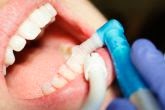
After the calculus has been removed, the next step is to polish. Using a spinning tool with a soft rubber end, your hygienist applies a gritty paste designed to polish the teeth and remove surface debris. After rinsing, your hygienist flosses your teeth to make sure that all calculus has been removed from between teeth.
An optional third step is a fluoride treatment. A flavored foam or gel fluoride is placed inside molded foam trays that fit over the teeth. These trays are left on the teeth for about 30 seconds. Fluoride helps strengthen teeth and make them more resistant to decay.

This twice a year deep cleaning and inspection helps protect your teeth and gums from decay as well as spotting early signs of serious issues such as oral cancer and gum disease before they become problems. If you haven’t been keeping your twice yearly cleaning schedule, give us a call today.