Comfortable, personalized dental care! Serving patients at two convenient locations in Niagara Falls.
Thursday, 28 November 2013
BURNING THE MIDNIGHT BACTERIA!
The all-night study session, the weekend-long term paper dash, late nights, early mornings and stress – these are all part of being a college student. But all these factors can lead to neglect and abuse of your regular dental health.
All that hustle and bustle can mean not only skipping your regular brushing, but also skipping balanced meals in favour of snacking on sugary, carbohydrate-rich ‘convenience’ foods and beverages. A steady diet of pizza and soda, donuts, coffee and cappuccino can take a toll on your oral health.
When you eat carbs, you never eat alone. Oral bacteria also feed on those insidious sugars and carbohydrates. This bacterial pig-out produces a sticky film called plaque that attaches to your teeth. If plaque isn’t removed every day, it builds up and eventually turns into a cement-like substance called tartar.
In addition to tooth decay, plaque and tartar can irritate your gums and cause them to become inflamed and bleed when you brush and floss your teeth. If left untreated, this condition can advance into periodontitis, an incurable gum disease that can lead to tooth-loss.
Another by-product of college, stress, also increases plaque levels and gingivitis production. pizza
When you are cramming for an important exam or rushing to an early class, brushing your teeth is probably the last thing on your mind. However, it needs to be the first thing you think about after you eat breakfast and before you go to bed. It takes only a couple of minutes twice a day to preserve your teeth and gums for a lifetime. In addition to making healthier food choices, use fluoride toothpaste, thoroughly brush your teeth and gums twice each day, and floss at least once every day. Use a tongue scraper to remove bacteria from your tongue.
We now offer walk in cleanings, walk in toothaches and convenient appointments before & after school.
So, when you study for your college exams, don’t forget to prep for your next dental exam.
Thursday, 21 November 2013
SWEET DECEPTION

We all know that sugar is bad for teeth. Oral
bacteria, fed by sugar, acts like a jack hammer boring through the enamel on
your teeth and into the delicate dentin. It is this bacterium that creates
sensitivity, cavities and potentially infection and tooth loss. Certainly candy
and soda should be treated with care but other simple carbohydrates are
essentially sugar in a less obvious form. The following foods have hidden forms
of sugar that should also be approached with caution..
Tomato sauce –
Tomato sauces and ketchups are loaded with sugar. On average, a tablespoon of
tomato sauce is equivalent to a tablespoon of sugar. If possible, use fresh
tomatoes instead of canned sauce.
Salad dressing –
Commercially available salad dressings are often loaded with excess sugar. A
healthier option could be achieved by making your own dressing from vinegar,
oil and herbs.
Yogurt – It
seems like such a healthy option with protein and probiotics but most yogurts
are drowning in syrupy flavourings. Several commercial brands have as much sugar
per serving as a piece of fudge. A better option would be unflavoured yogurt
with fresh fruit added for sweetness.
Breads –
Many varieties of bread, even whole wheat, contain as much as a teaspoon of
sugar per slice. Choose whole grain breads with a high fibre and low
carbohydrate content. Meal Replacement Bars – Some meal replacement bars can
contain as much sugar as a candy bar. A piece of high fiber fruit or nuts might
be a better choice than a meal replacement bar.
Being aware of hidden sugar can help you make
more informed choices for your dental health and overall health. To maintain
good dental health, eat a variety of fresh fruits and vegetables, good sources
of protein and healthy fats like olive oil as well as keeping a regular checkup
schedule.
Thursday, 14 November 2013
CLEAN SWEEP
Most of us don’t go to the doctor’s office
unless we are sick or injured. That may be alright for your overall health but
not for your dental health. While at home maintenance is vital, even the most
thorough brushing and flossing won’t negate the need for twice yearly dental
cleanings to keep your mouth healthy. So what all is involved with a dental
cleaning and why are they so necessary?
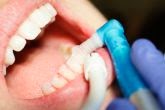
A dental cleaning is more in-depth than your
daily brushing. A toothbrush can remove plaque and bacteria but it can’tbrush away calculus build-up. Your dental hygienist uses a small metal tool called a scaler to breakup and remove calculus from the teeth, in-between and under the gumline. Failure to remove calculus provides plaque and bacteria a breeding ground for cavities and gum disease.
After the calculus has been removed, the next
step is to polish. Using a spinning tool with a soft rubber end, your hygienist
applies a gritty paste designed to polish the teeth and remove surface debris.
After rinsing, your hygienist flosses your teeth to make sure that all calculus
has been removed from between teeth.
An optional third step is a fluoride treatment.
A flavored foam or gel fluoride is placed inside molded foam trays that fit
over the teeth. These trays are left on the teeth for about 30 seconds.
Fluoride helps strengthen teeth and make them more resistant to decay.
This twice a year deep cleaning and inspection
helps protect your teeth and gums from decay as well as spotting early signs of
serious issues such as oral cancer and gum disease before they become problems.
If you haven’t been keeping your twice yearly cleaning schedule, give us a call
today.
Thursday, 7 November 2013
HOW DRY I AM
Saliva is the first step in digestion and serves
to keep the mouth moist and clean. When your mouth doesn’t produce enough
saliva, you become more vulnerable to bacteria and fungi. Xerostomia, or dry
mouth, can be caused by a variety of situations.
Some of the most common causes of dry mouth are:
Medication side effects –
prescription and nonprescription drugs for allergies, colds, acne and
hypertension can result in dry mouth symptoms. Medical treatments such as
chemotherapy for head and neck cancers can also be a cause.
Dehydration – failing
to stay hydrated during fitness or due to fever or vomiting can cause temporary
dry mouth.
Nerve damage –
damage to the nerves in the head and neck area can lead to dry mouth issues.
Tobacco – use of
tobacco can aggravate dry mouth symptoms.
If you are experiencing dry mouth symptoms, some
ways to increase saliva production include:
- Drinking plenty
of water
- Sucking on
sugar-free candy or chewing sugar-free gum
- Using a room
vaporizer when you sleep
- Over-the-counter
oral rinse products that are designed to increase moisture
- Consulting with
your physician about changing medications
- Ceasing or
limiting tobacco use
Chronic dry mouth can increase your risk for gum
disease, dental decay and bad breath. If you are experiencing dry mouth on a
regular basis, give us a call to assess the causes and potential treatments.
Wednesday, 23 October 2013
HYGIENISTS ARE NOT JUST ANOTHER PRETTY FACE
This year marks the 50TH anniversary of the Canadian Dental Hygienists’ Association
In honour of all the
hard-working registered dental hygienists across our country, here are a few
myths we’d like to dispel.
| Donna of McLeod Dental Care |
Myth: We are just another
pretty face.
Fact: Although it’s true we
are a good-looking lot, we also have brains. To become a dental
hygienist, one must first be accepted into an accredited college.The competition is
tough, with far more applicants than available slots.Receiving a degree is
only one part of the journey.
We also must pass
rigorous provincial written board exams along with written and clinical regional exams. Yearly we are required to keep a professional portfolio including 25 hours of updated courses.
Myth: We love to nag people
about flossing.
Fact: What we love is
to complement those who do floss on a daily basis. The first sign of
periodontal disease (bone loss around teeth) is gingivitis. Gingivitis is
bleeding, swollen and infected gums caused by bacteria. With only brushing,
bacteria are allowed to settle in between the teeth and make new colonies
consisting of millions of little germs that excrete acid onto the teeth and
bury into the gums. Your gums are skin. If the skin on any other part of your
body was swollen and bled from the slightest contact, you’d do everything you
could to take care of that infection. Do the same for your mouth by flossing
daily to prevent infection and decrease the chances of getting a cavity between
the teeth. Live by the mantra “healthy gums do not bleed.” (By the way, don’t
lie to us and tell us you floss. We aren't fooled!)
![]() |
| Kristy Lee of McLeod Dental Care |
Myth: What happens in
the mouth stays in the mouth.
Fact: Your mouth is the
portal to your body. The bacteria that cause plaque in the mouth are the same
bacteria that clog arteries and lead to heart attack and stroke. Research by
the Mayo Clinic has shown that people with gum disease are twice as likely to
die from heart disease and three times as likely to die from stroke. Pregnant
women who have periodontal disease are more likely to deliver a premature baby.
Gum disease can affect glucose levels of diagnosed diabetics, and can even
place one at risk for becoming diabetic. Gum disease increases the risk of
Alzheimer’s disease, as well as head, neck, pancreatic and kidney cancer.
Research has also found an association between gum disease and rheumatoid
arthritis.
Myth: We love to inflict pain.
Fact: We strive to give you the best treatment we can in the time
allowed and truly try to make it as comfortable as possible. You can make a
difference in the comfort of your appointment by brushing your teeth with
fluoride toothpaste at least twice a day, and by flossing at least once per
day. People with healthy mouths usually look forward to and enjoy their
appointments. Really!
Myth: We just clean teeth.
Fact: Scraping tartar build-up off teeth and nagging about flossing are
just two of our important tasks. In a day’s work, we also review medical
history, assess for periodontal disease, screen for oral cancer, provide oral
hygiene instructions, take radiographs to look for abnormalities, suggest
products that improve individualized care, educate, administer anaesthetics
answer questions, increase comfort, decrease anxiety, place sealants, apply
fluoride, all while having a personalized conversation.
Some days we go to schools
to demonstrate proper oral hygiene to children or provide dental screenings.
We volunteer for various programs. We learn about the latest
research, technologies and products.
And, yeah, we clean teeth.
McLeod Dental Care has 14 Registered Dental Hygienists on staff and is proud of their dedicated, caring and hard working team.
Thursday, 17 October 2013
HAVE BRUSH WILL TRAVEL
A vacation is sometimes a good excuse to eat
rich foods, get more sleep (or less) and generally abandon good habits. Don’t
let oral hygiene end up on the ‘hooky’ list. Neglecting your teeth while
traveling can create a breeding ground for calculus build-up, cavities and
pulpitis. Pre-plan your oral routine with a waterless, pre-pasted toothbrush.
When it comes to these travel companions, there
are some different options. One style delivers tooth gel or liquid onto the
bristles with a squeeze of the replaceable cartridge, located in the handle.
Another style delivers toothpaste onto the bristles when you push the handle
into the brush head. Others have a dot of toothpaste in the center of the bristle
head.
Some styles of toothbrush require water while
others do not. If your vacation requires long periods away from indoor
plumbing, consider choosing the waterless, pre-pasted variety. This convenient
option can fit in a pocket or backpack for hikers, bikers and even beach
dwellers.
Prepare your toddler with a ‘dry run’. Play
dentist’s office with your child to give him or her some idea of what is in
store. Lean your toddler back in a chair and attach a paper bib. Use a big
mirror to look at his or her teeth. Then encourage your child to play dentist
with one of his or her toys. This will help the child feel more in control of
the situation in the real office.
Consider also using disposable floss picks when
on the road. Unlike regular floss, a pick can be used with one hand. This makes
them exceptionally convenient when you are on-the-go.
Don’t let oral bacteria be one of the souvenirs
that you bring home from your vacation. Whether you use a traditional brush and
paste or a pre-pasted travel style, make oral hygiene one of your vacation
plans.
Thursday, 10 October 2013
COLA NOT
Studies at Tufts University show that there may
be a link between drinking cola and bone loss in women. In the study, the more
cola and soda that women drank, the lower their bone mineral density was.
Drinking cola isn’t just bad for your teeth but it may be eroding your jawbone
as well.
This bone loss was present even in women who
still drank a significant amount of milk.
The study was conducted by studying bone mineral
density in three areas on the hip. This link between cola drinking and bone loss
wasn’t affected by smoking, drinking alcohol, age or calcium consumption.
Phosphoric acid may be the ingredient to blame
for bone loss. While phosphorus is an important bone mineral, getting a
disproportionate amount of it compared to calcium could lead to bone loss.
While caffeine is long known to interfere with calcium absorption,
non-caffeinated sodas had a similar, if lesser, effect.
Interestingly, the men in the study were
unaffected by cola consumption.
So, how can you off-set this bone loss?
- Eliminate or
reduce the amount of cola in your diet.
- Get more calcium
and vitamin D into your diet.
- Add weight
bearing exercise into your routine such as walking up stairs.
If you have questions about your own bone
density, call your doctor and set up a simple bone density test. If you are
concerned about the effects of cola consumption on your teeth and jawbones,
give us a call today.
Subscribe to:
Posts (Atom)